Loss Prevention
Part of Retail loss-prevention technology
Comparing EAS/RFID product protection and detection systems
Tags, locked fixtures, EAS gates and RFID systems protect different products in different ways.
EAS detects a tagged item leaving without checkout processing; RFID can add a unique item identity to detection and inventory use. The named options differ in detection technology, tag handling and whether they provide item-level stock information.
Describe the control
EAS uses a hard or soft tag attached to or embedded in a product, with antennas near store entrances or exits. At checkout, staff remove or deactivate the tag; an unprocessed tag can trigger an alarm at the exit antennas.
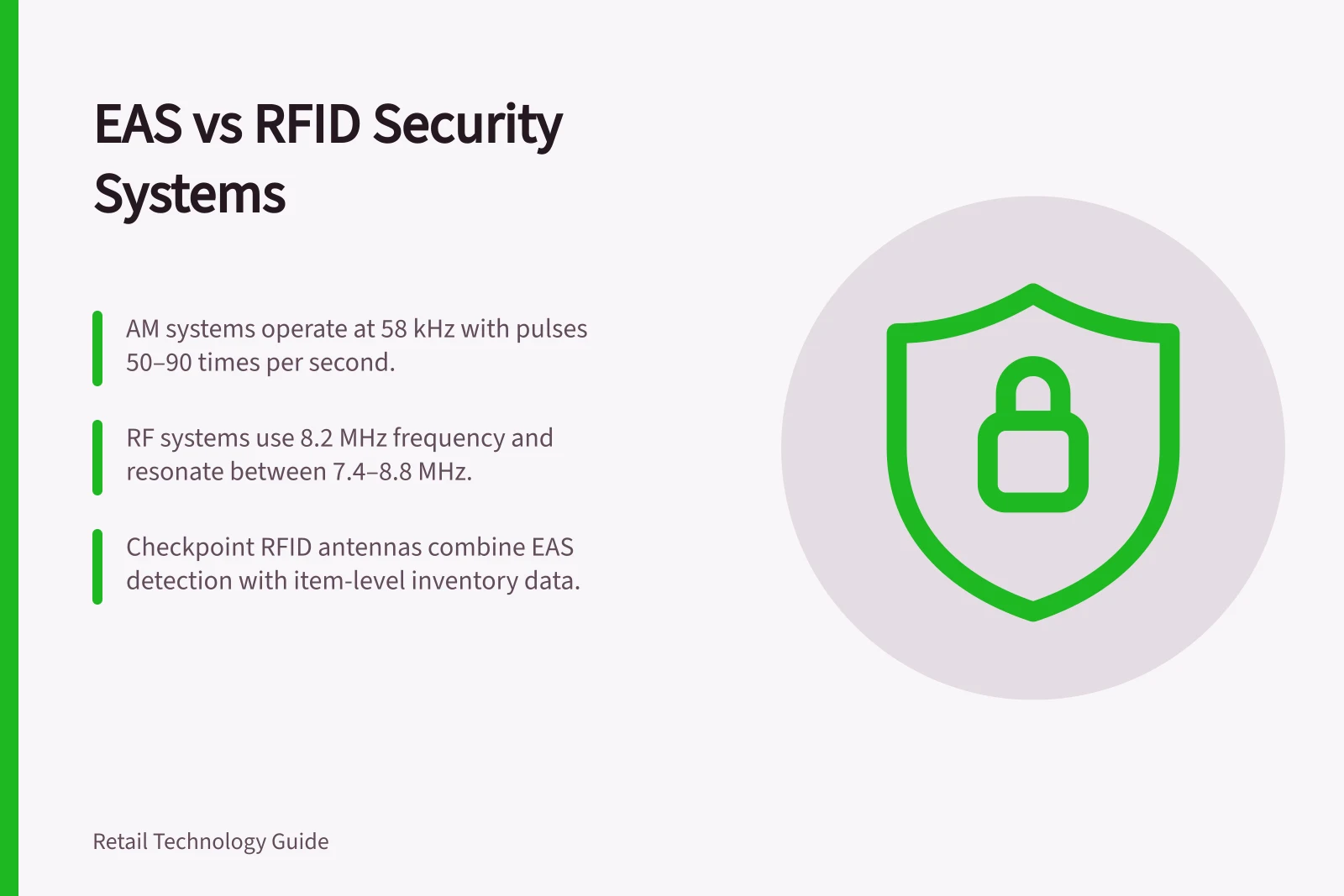
Acousto-Magnetic (AM) systems operate at 58 kHz and send pulses 50 to 90 times a second. Radio Frequency (RF) systems operate at 8.2 MHz, and RF tag circuits can resonate between 7.4 and 8.8 MHz.
RF systems use hard tags or soft labels, including adhesive labels. Labels are deactivated at checkout, while hard tags are removed with a detacher; swept or pulsed antennas can be added according to doorway width.
Sensormatic AM is positioned for extended detection range and lower susceptibility to external electronic interference. Its RF option is an affordable anti-theft solution for open merchandising.
RF EAS alarms when a tag is detected, while RFID can identify the product using unique information stored on its tag. Checkpoint RFID-enabled antennas pair RF EAS detection with RFID product information and longer detection ranges.
Sensormatic AM/RFID Storefront Systems combine dual-technology storefront protection with item-level RFID stock data. Sensormatic also offers overhead RFID EAS for open-plan stores or shopping centres where entrance pedestals are restricted, with wide exit coverage and an invisible entrance.
Sensormatic RFID Sensors support inventory management and merchandise protection. Its Point-of-Sale (POS) Systems use RFID for inventory management and a seamless shopper experience.
TAGIT 3D EM EAS detects EM security labels across multiple orientations using a patented algorithm. It is designed for high-risk, difficult-to-secure products, including small, irregularly shaped and metallic merchandise; TAGIT offers more than 300 EM label types.
EAS vs RFID: Key Differences in Product Protection and Detection
- Tag TypesEAS: hard tags or soft labels; RFID: embedded tags with unique data per item.
- Item-Level InventoryEAS: no; RFID: yes, enables real-time stock tracking.
- Detection RangeAM: extended range, low interference; RFID: longer detection range with checkpoint integration.
- Best ForEAS: open merchandising, affordability; RFID: inventory management, high-risk items.
Protect the interaction
For conventional exit detection, Sensormatic AM suits stores prioritising extended detection range and reduced susceptibility to external electronic interference. Sensormatic RF suits open merchandising where an affordable anti-theft solution is wanted, with hard tags or soft labels available for different products.
For small, irregular, rounded or metallic products that are difficult to secure with conventional EAS labels, TAGIT 3D EM and its range of EM labels are designed for those merchandise challenges. Its detection is not dependent on the label’s position within the magnetic field.
For item-level information alongside exit protection, Checkpoint RFID-enabled antennas combine RF EAS detection with RFID product data. Sensormatic AM/RFID Storefront Systems add RFID stock data to storefront protection, while Sensormatic overhead RFID EAS suits sites where entrance pedestals are restricted.
Sensormatic RFID Sensors and POS Systems are options when inventory management is part of the requirement: the Sensors also support merchandise protection, while the POS Systems use RFID for inventory management and the shopper experience.
RF has historically been considered more affordable to install, but EAS costs vary with the system, entryways, doorway width, installation, merchandise volume and the number of tags, detachers and deactivators required. Ongoing costs can include replacement tags and labels, maintenance and electricity.
Top EAS/RFID Systems for Australian Retailers
- Sensormatic AM/RFID Storefront SystemsDual-technology protection with item-level stock data; ideal for large stores and shopping centres.
- Checkpoint RFID-Enabled AntennasCombines EAS detection with RFID product identification and extended coverage.
- Sensormatic Overhead RFID EASInvisible entrance solution for open-plan stores where pedestals are restricted.
- Sensormatic RFID Sensors & POS SystemsSupports inventory management and seamless checkout experience with RFID integration.
Australian Retail Security System Considerations
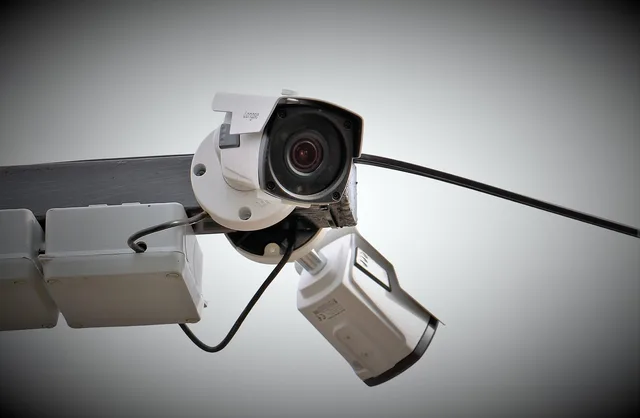
- Privacy ComplianceSecurity cameras and monitoring must comply with OAIC guidelines under the Privacy Act 1988 (Cth).
- Tag Deactivation MethodsHard tags removed with detachers; soft labels deactivated at checkout.
- Installation Cost FactorsSystem type, entryways, doorway width, merchandise volume, and number of tags/detachers.
- Ongoing CostsReplacement tags, maintenance, electricity – vary by system and scale.