Loss Prevention
Part of Retail loss-prevention technology
Reviewing false alarms before expanding a system
A gate that alarms often can make staff ignore the signal and make customers uncomfortable.
A gate that alarms often can lead staff to ignore the signal and make customers uncomfortable. Before adding the same equipment to more stores, review the causes of false or unverified alarms.
Create an alarm log
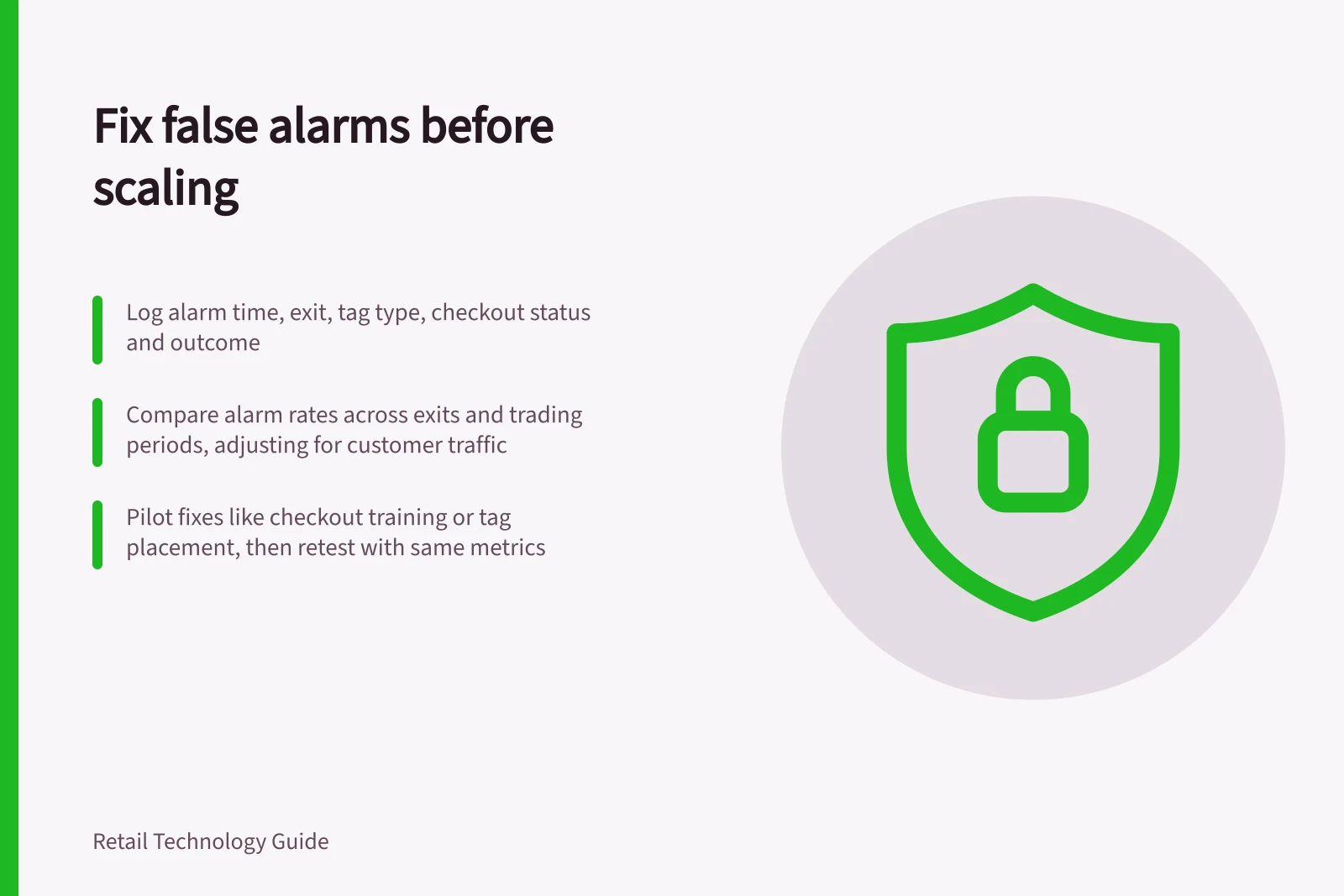
Log the time, entrance, tag type if known, checkout status, staff observation and outcome. Classify each as a confirmed loss, a missed tag deactivation, a system fault or an unresolved alarm. An alarm count alone tells you little about loss: some incidents are never detected, and some alarms involve no loss.
Compare alarm rates across exits and trading periods, adjusting for customer traffic if available. Check the deactivation workflow, nearby tagged stock, sensor placement and maintenance history. Where EAS, RFID and video are combined, verify what each signal captured rather than trusting the dashboard to identify a person or item correctly.
Alarm Classification and Impact on Store Operations
- Confirmed Loss
- Actual theft detected by alarm and verified by staff or video
- Missed Tag Deactivation
- Item leaves without proper deactivation at checkout, triggering alarm
- System Fault
- False alarm due to equipment malfunction or sensor misalignment
- Unresolved Alarm
- Alarm triggered but not verified or acted upon within standard timeframe
Key Metrics to Track When Evaluating Alarm Reliability
- Total Alarms (Monthly)
- Not specified – requires internal tracking
- Confirmed Loss Incidents
- Track percentage of alarms that result in actual loss detection
- Customer Complaints Related to Alarms
- Reported discomfort or frustration during alarm events
Change one thing and retest
Pilot a fix in one area—checkout training, tag placement or equipment service. Keep the baseline, then review the same measures: confirmed incidents, unverified alarms, staff time and customer complaints. If the system uses recordings, follow the store's privacy controls and applicable law. Expand only when the signal is reliable enough for staff to respond consistently and respectfully.