Inventory Visibility
Comparing sensor readings with manual observations
Set matching event rules and observation windows, reconcile missed or extra counts, and report uncertainty before relying on store sensor data.

Section
Inventory Visibility
Set matching event rules and observation windows, reconcile missed or extra counts, and report uncertainty before relying on store sensor data.
Inventory Visibility
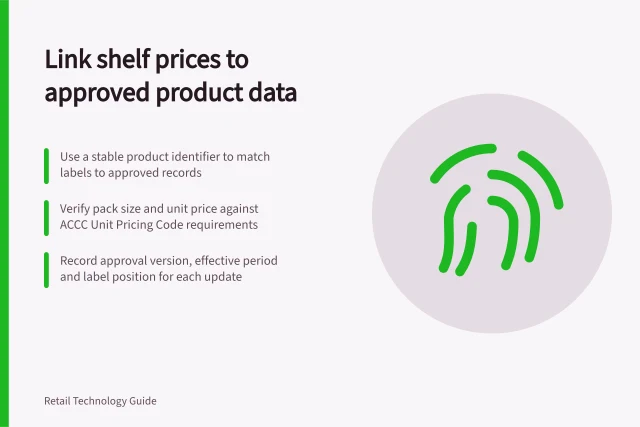
Map product identity, approved selling prices, promotions and unit prices before publishing information to electronic shelf labels.
Inventory Visibility
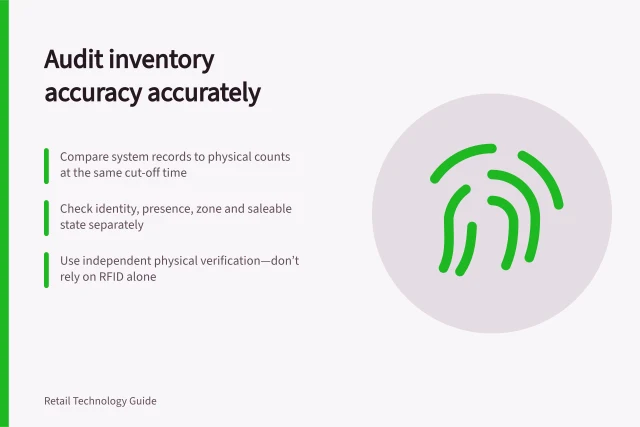
Measure item-level stock accuracy against a physical reference, separate presence from location and saleable state, and report discrepancies clearly.
Inventory Visibility
Understand the difference between store entry counts, observed paths and journeys linked to customer records before choosing a measure.
Inventory Visibility
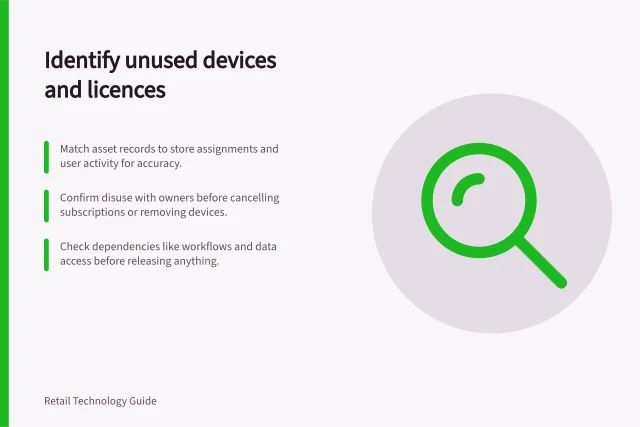
Reconcile retail assets and software licences with actual work, confirm dependencies and release disused items safely.
Inventory Visibility
Understand what item-level RFID can reveal about store stock, where its limits lie and how to assess an inventory visibility trial.
Inventory Visibility
Compare RFID and barcode tracking by capture workflow, item identification, exceptions and the store task each method must support.
Inventory Visibility
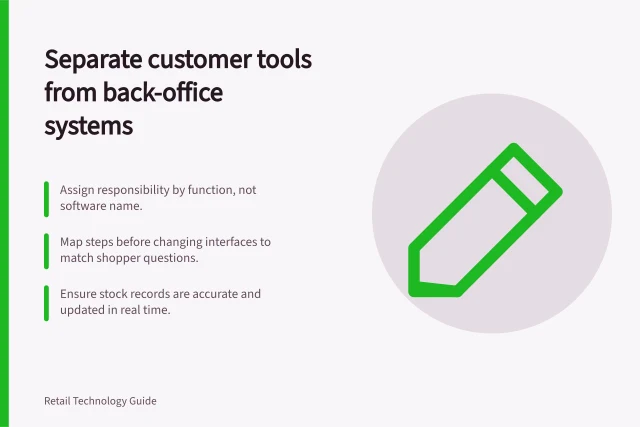
Distinguish shopper interfaces, staff workflows and governing store records so each technology change addresses the right function.
Inventory Visibility
Define useful picking, ready and collected states, record exceptions and keep the order trail aligned with the parcel.
Inventory Visibility
Group devices by exact model, count distinct failures and check exposure and local causes before calling a pattern a model defect.