Store Networks
Part of Technology planning for physical retail stores
Mapping store problems before buying retail technology
Map a shop-floor problem from first request to final outcome, separate observations from causes and write a useful buying brief.
Before buying a store tool, map the work that fails. Note where it starts, who handles it, where it stalls, and what the customer or team experiences. The result should be a problem statement that can be checked, not a request for a particular screen or system.
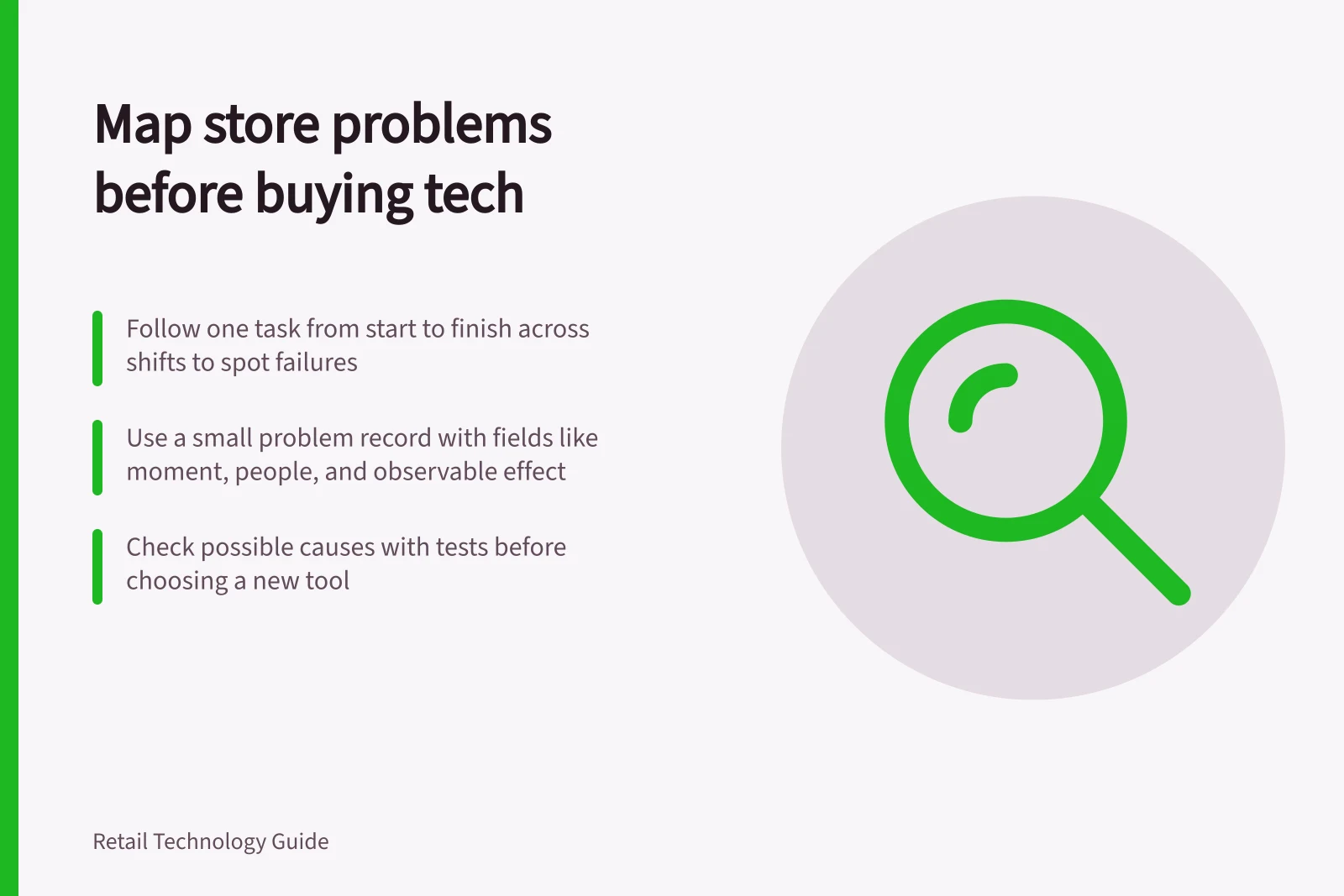
Watch the task from start to finish
Choose one recurring situation, such as a customer asking for a size that appears to be in stock. Follow the request from the first question to the final answer. Note each handoff: a sales colleague checks a device, another person searches the stockroom, and someone tells the customer what was found. Observe more than one shift if staffing or trading conditions may affect the problem.
Ask staff about workarounds and missing information. Record observations separately from suspected causes. “The customer waited while staff searched” is an observation; “we need a new stock app” is a proposed solution. An inaccurate stock count, an unclear storage location and an awkward lookup screen could all produce the same wait.
Use a small problem record
Field / Question to answer
- Moment
- At what task step does the difficulty appear?
- People
- Which shopper or staff roles are affected?
- Observable effect
- What delay, correction or unanswered request occurs?
- Possible causes
- What explanations still need checking?
- Current workaround
- How is the task completed today, if at all?
- Baseline
- What can be counted or timed consistently?
Mark uncertain fields as uncertain. If there is no reliable baseline, begin with a short observation period. Count the same type of event each time and note circumstances, such as a delivery day, that could affect the result.
Check causes before choosing a tool
For each possible cause, identify a check that could disprove it. If requests are lost between colleagues, try a clearer handoff. If displayed stock differs from what staff can find, investigate the stock record and receiving or adjustment process. If customers cannot find the help point, test clearer directions.
The diagnosis gives a supplier a specific task to demonstrate if a new tool is still needed. Prioritise problems by their effect, frequency and whether the store can act on the cause. Keep unrelated complaints out of the same project merely because one product claims to address them all.
Turn the map into a buying brief
Write one sentence naming the task and desired change: “During busy shifts, staff should be able to give a customer a dependable answer about an alternative size without losing the request between colleagues.”
Add the observations, unresolved causes, relevant systems and owner of each step. State what a demonstration must show, including the unavailable-item case.
Pause the purchase if the team cannot yet tell whether poor data, an unclear process or the current tool causes the problem. Investigate that uncertainty first.