Rollout & Reviews
Part of Smart fitting room technology
Measuring whether the system improves the fitting experience
Measure fitting-room change through request completion, shopper experience and store context without attributing every sale to a screen.
A new screen may generate many taps and still leave shoppers waiting for help. Measure the service outcome the system was installed to improve, then check whether the experience changed for the people using the room.
Build a baseline first
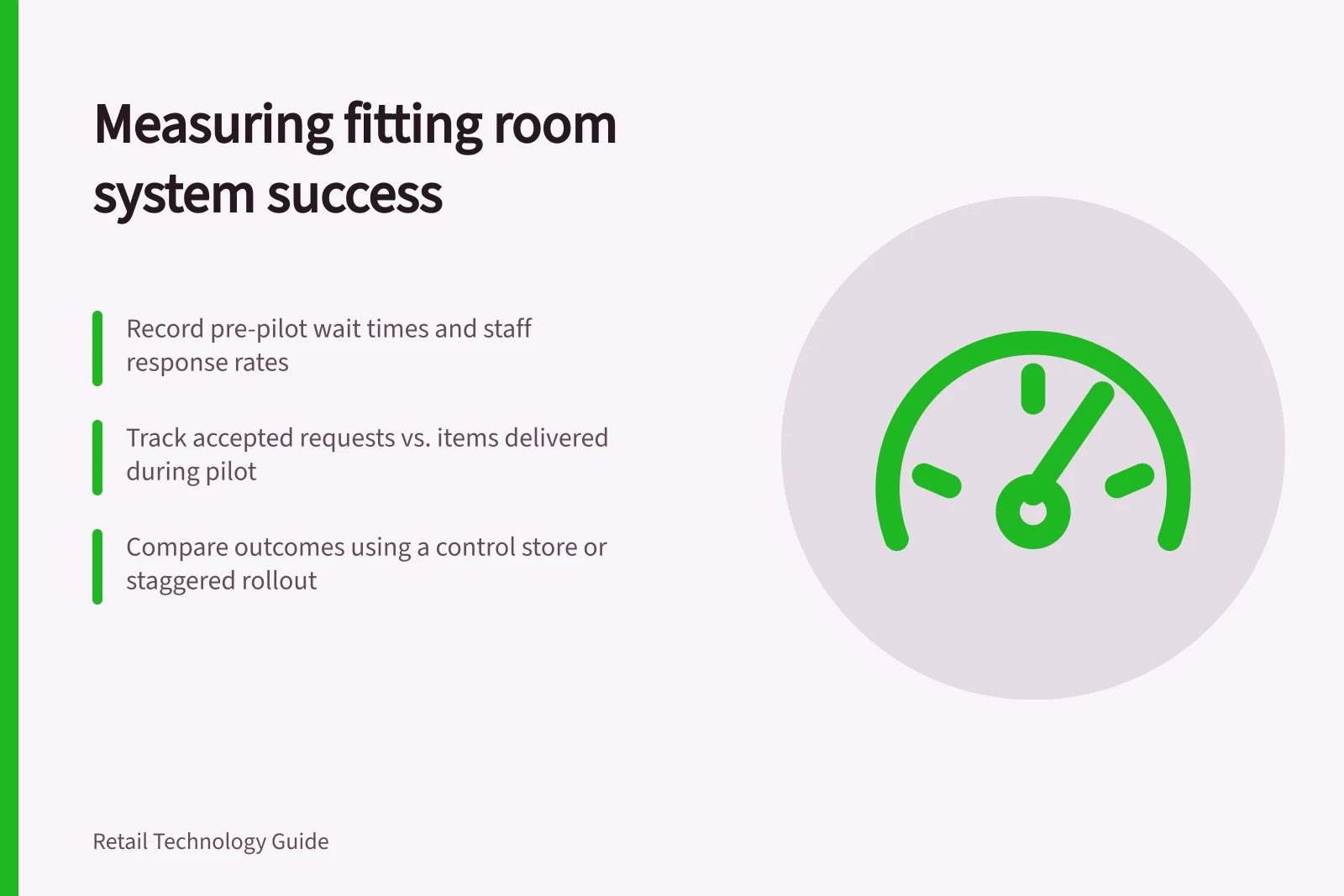
Before the pilot, record comparable shifts: how often shoppers ask for another size, how many requests receive a useful answer, wait time, and reasons staff cannot complete a request. Note stock accuracy, staffing and promotions so later comparisons are interpretable.
Gather feedback without interrupting the shopper.
Crave Retail describes item recognition for what the shopper brought in, requests for another size, colour or item, saving items for later and rating the experience. Those may help diagnose the service, but the available fields and their accuracy should be verified in the chosen configuration.
Vendor-reported performance figures are not a forecast for a different store.
Pre-Pilot Baseline Data Collection Checklist
- Record unanswered requests by shift
- Track wait times during peak hours
- Gather shopper feedback without interruption
- Verify item recognition accuracy in system configuration
- Document staffing, promotions and stock levels
Compare outcomes, not just activity
During a pilot, separate accepted requests from items actually delivered. Review delays by time of day and store zone.
Ask whether shoppers found the feature easy to use and whether staff could respond without neglecting other work. Include people who chose not to use it; otherwise the results describe only willing users.
Purchase rate and basket size can be useful context, but they are affected by assortment, stock, staffing and seasonality. Do not credit every subsequent sale to the fitting room.
A comparison store or staggered rollout can improve confidence, though it still needs careful matching and honest reporting of other changes.
Decide in advance what would justify expansion, revision or removal. A useful result may be fewer unanswered requests, even without a clear sales change.
A rise in screen activity without better service is a reason to redesign the workflow, not to declare success.
Steps to Evaluate Fitting Room System Success
- Separate accepted requests from delivered items
- Review delays by time of day and store zone
- Survey shoppers on ease of use and staff response
- Include non-users in evaluation for unbiased insight
- Define success criteria before rollout