Store Networks
Assigning store tasks with clear completion evidence
Define store tasks, choose proportionate completion evidence and keep blocked or rejected work visible to the right reviewer.

Desk
Reviews the devices and displays retail teams put in front of customers and staff.
Store Networks
Define store tasks, choose proportionate completion evidence and keep blocked or rejected work visible to the right reviewer.
Store Networks
Check device support, permissions, offline behaviour, submission status and privacy before field retail teams rely on a mobile app.
Self-service Devices
Select a kiosk task by checking its answer, dependencies, accessibility, exceptions and the shopper’s finish point.
Self-service Devices
Choose a bounded store technology pilot, define the question and baseline, prepare the service path and set decision rules.
Self-service Devices
Compare store collection handoff needs with documented Shopify and Square workflows, plan limits and counter checks.
Digital Signage
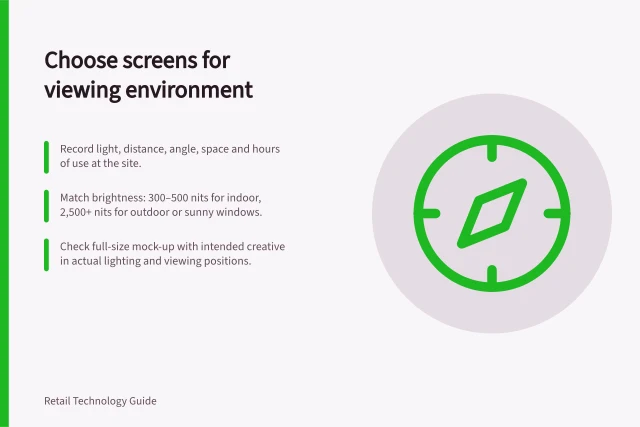
Assess light, distance, angle, sunlight and installation conditions before choosing a retail signage screen.
Self-service Devices
Compare each retail device's repairs, repeat faults, downtime and missing records before deciding whether to repair, monitor or replace it.
Digital Signage
Compare Vusion, Pricer and SOLUM on the documented route from an approved price to a shelf label, with limits to verify in your store.
Store Networks
Compare Deputy, Humanforce and YOOBIC by roster control, store tasks, completion evidence and documented limitations.
Digital Signage
Plan retail digital signage around a shopper question, the viewing environment, accurate content and a workable store response.
Self-service Devices
Understand how electronic shelf labels fit price approval, checkout, shelf placement and exception handling in an Australian store.
Self-service Devices
Compare queue counts, sensor estimates and ticket timestamps by what they measure, then check boundaries and staff response in the store.
Store Networks
Plan store-specific hardware installations with layout patterns, site records, change control and checks at the final position.
Self-service Devices
Identify a measurable fitting-room frustration before choosing screens, sensors or associate apps.
Store Networks
Map a shop-floor problem from first request to final outcome, separate observations from causes and write a useful buying brief.
Self-service Devices
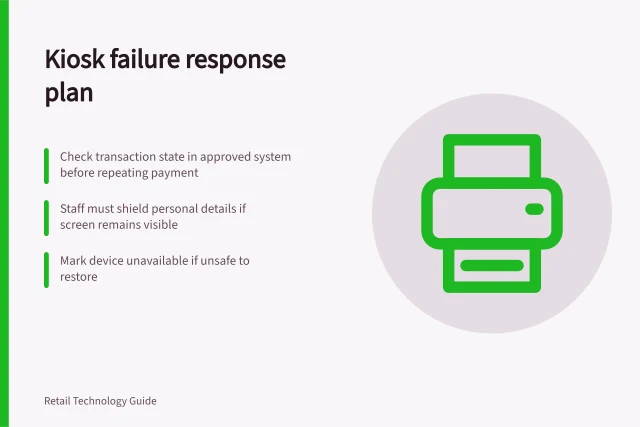
Give shoppers a clear next step and staff a safe handoff for kiosk faults, uncertain results and payment interruptions.
Store Networks
Map mobile tasks, survey the store layout and check that staff devices complete their work across the shop floor.
Digital Signage
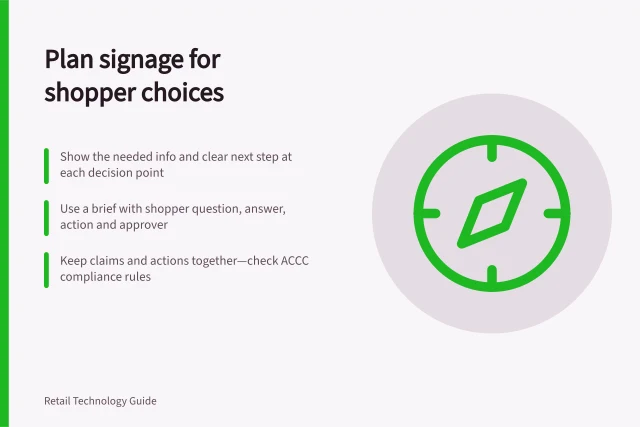
Build retail screen messages around a shopper question, a substantiated answer, a clear action and an expiry rule.
Self-service Devices
Record the device, observed symptom, customer effect and service state so retail equipment faults reach the right responder.
Digital Signage
Align collection messages, signs and arrival instructions so customers can find the right queue and staff can complete the handoff.
Self-service Devices
Plan a retail kiosk around a shopper task, then check access, store data, payments, assistance and ongoing operation.
Store Networks
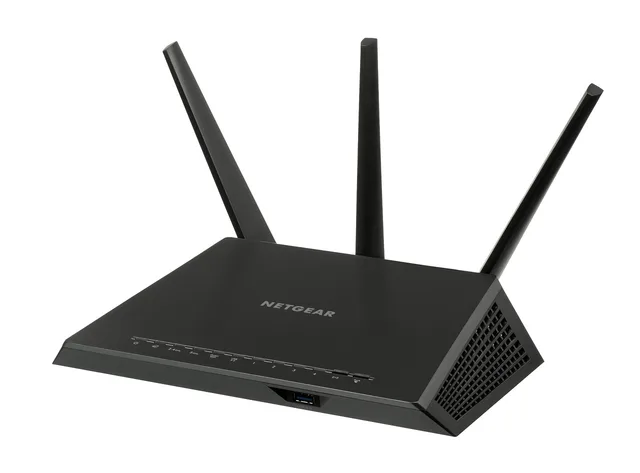
Plan a retail store network around essential tasks, shop-floor coverage, guest access, fault reporting and an outage procedure.
Store Networks
Plan retail workforce technology around rosters, clear store tasks, completion review and mobile access, with Australian operating considerations.
Self-service Devices
Check the public session, staff access, payment terminal and upkeep responsibilities for a retail kiosk.
Self-service Devices
Choose store-approved maintenance windows, separate due dates from bookings and plan how customer-facing equipment returns to service.
Store Networks
Use a store-specific access-path list and witnessed checks to accept, revise or hold shopper Wi-Fi isolation from tills, staff and payment systems.
Self-service Devices
Test smart fitting-room access with people using different input methods and preserve an equivalent human-help route.
Self-service Devices
Test realistic kiosk tasks, access needs, errors and the proposed shop-floor setting before fixing the device in place.
Store Networks
Use a defined store sample to compare actual shelf prices with checkout, trace mismatches and check promotion changeovers.